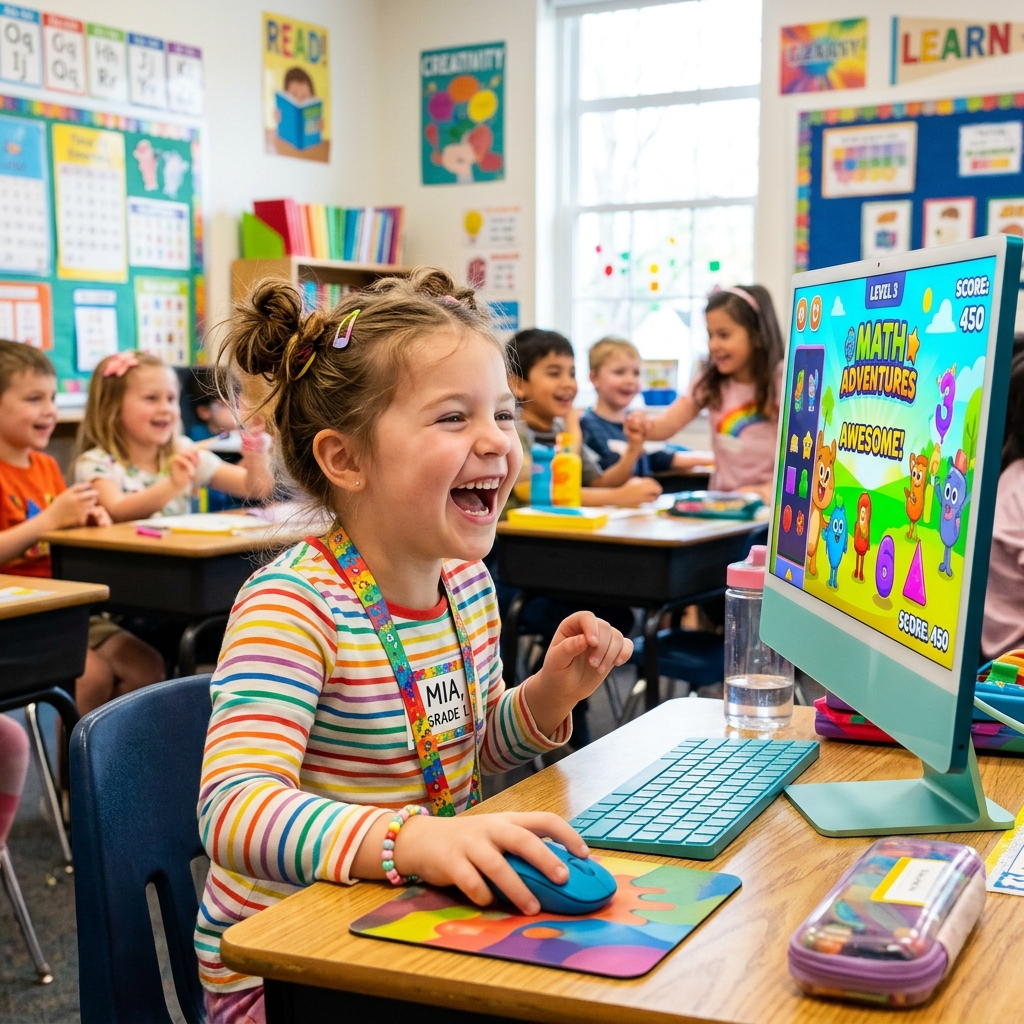
In a digital world, typing is a foundational skill just like reading and writing. But for kids, boring drills don't work. Gamification is the key to keeping them engaged and motivated. When a child is "playing a game," they don't realize they are actually building fine motor skills, letter recognition, and spelling accuracy. In this guide, we'll explore the best ways to introduce kids to the keyboard without it feeling like schoolwork.
Why Games Work Better Than Lessons: The Power of Play
Games provide instant feedback and rewards. Whether it's unlocking a new character, hearing a satisfying "pop" sound, or beating a high score, these small "wins" trigger dopamine, making the learning process addictive and fun. Traditional typing tutors can feel like schoolwork, which often leads to resistance from younger learners. Play-based learning is the natural way children's brains absorb new information.
Starting with the Home Row Anchors: The "Finger Homes"
Good kids' typing games focus on the home row first. By turning keys into "home bases" or "finger homes" for little fingers, they build a solid foundation. Using colors to represent different fingers (e.g., green for index, blue for middle) is a highly effective visual aid for children. Tell them stories about the fingers—how the index fingers are the "explorers" who always come home to F and J.
Building Reactionary Speed and Accuracy: The "Mission" Mindset
Games like "Meteor" or "Rain" on Funnytyping are perfect for kids. They encourage quick thinking and fast finger movement in a low-pressure, visual environment. Instead of typing long, boring paragraphs, they type short, fun words to "save the world" or "stop the meteors," which keeps their focus intense but joyful. Every successful word is a victory.
The Role of Parents and Teachers: Encouragement First
Encouragement is more important than speed at a young age. Celebrate the "perfect accuracy" runs rather than the fast ones. If a child types at 10 WPM but with 100% accuracy, they are doing better than a child typing 20 WPM with errors. By the time they reach middle school, a child who can type 30 WPM comfortably will have a massive advantage in every single subject, from writing essays to computer science.
Setting Up a Kid-Friendly Workspace
Standard keyboards are often too large for small hands. Consider a compact (60% or 65%) keyboard or one designed for smaller hands. Ensure their chair is high enough so their elbows are at the correct angle. If their feet don't reach the floor, use a footrest. Physical comfort is the key to preventing them from developing bad postural habits early on.
Healthy Screen Time Boundaries: The 15-Minute Rule
Typing practice is one of the most productive ways for kids to spend time on a computer. It builds fine motor skills, improves spelling, and sets them up for success in school. However, keep sessions short—15 minutes of "fun" typing is better than an hour of forced practice. The goal is to make them *want* to come back the next day.
Conclusion: A Skill for a Lifetime
In the 21st century, the keyboard is the pen of the future. By helping your child master it early, you are giving them a tool that will save them thousands of hours over their lifetime. Make it fun, keep it light, and watch them become digital masters before they even hit high school.